Compacta
Regular green Compacta, known for its densely folded leaves and long history in cultivation.
Regular green Compacta and its historical identity. Similar names and curled leaves do not establish that plants are the same clone.
Overview
Compacta is the green, folded-leaf Hoya commonly called Hindu rope. Its leaves curl and bunch closely along the stem, giving the vine a dense, irregular outline. This page concerns regular green Compacta. Named variegated forms and Hummel’s Krinkle Kurl are treated separately.
Photo Gallery
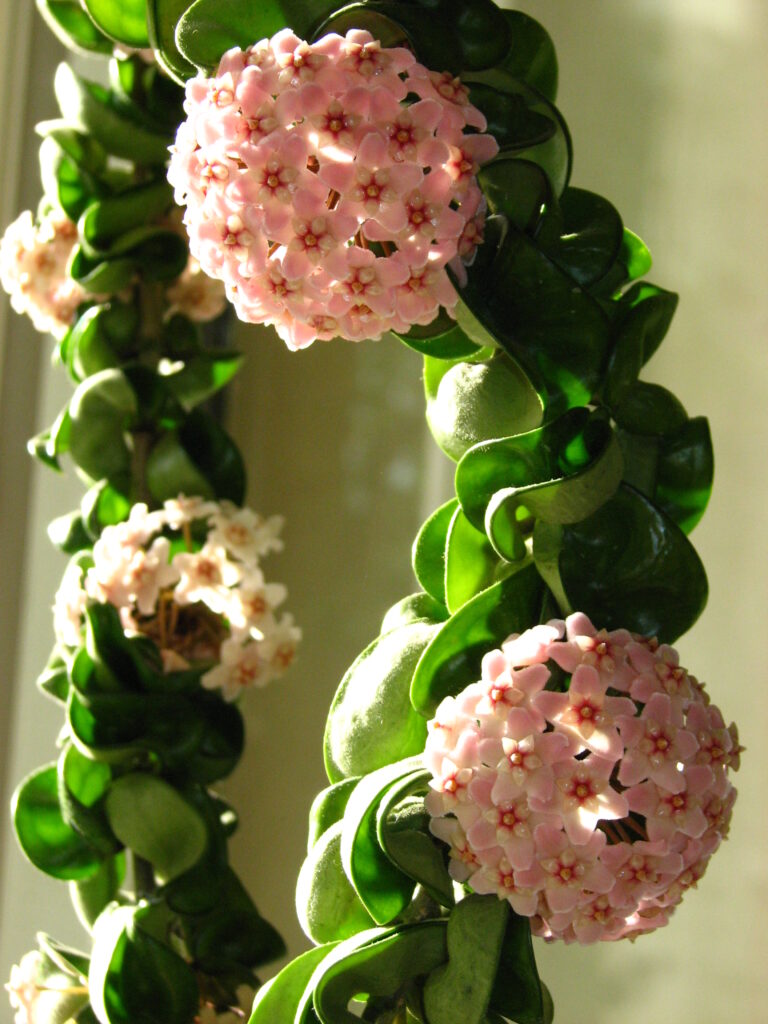 Compacta foliage and flowers (provider identification)View photo detailsClose photo details
Image source · Rights and reuse terms

Folded green leaves and rounded pink flower clusters on a plant identified as Hoya compacta by its photographer. The source identification is retained; continuity with historical Compacta material is unverified. Metadata removed for privacy; no crop or colour edit. WordPress creates resized display copies.
Photographer or creator: Andrey Korzun (Kor!An)
Identification basis: Photographer identification on the exact Wikimedia Commons file page and visible folded green foliage; no authenticated historical clone or voucher.
Rights and reuse: CC BY-SA 3.0; credit Andrey Korzun (Kor!An). Original title: Hoya compacta 14.JPG. Source and license links are provided in Photo details. Metadata removed; resized display copies. Adaptations must retain the same or a compatible license.
Image record: IMG-000242
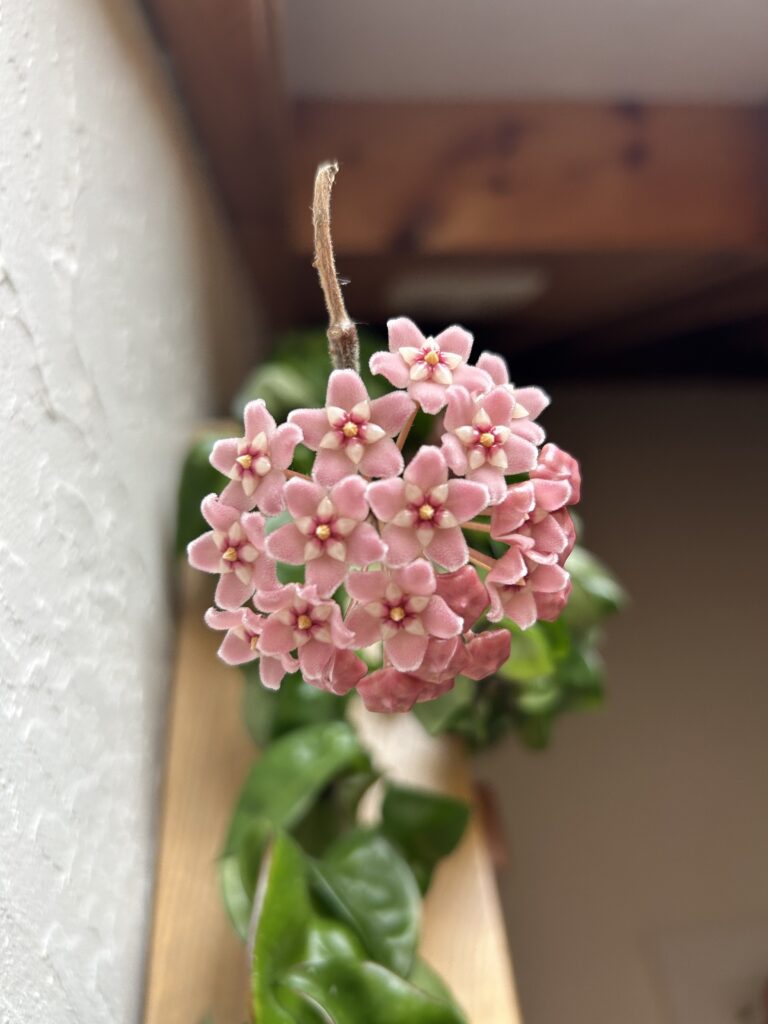 Compacta flowers (provider identification)View photo detailsClose photo details
Image source · Rights and reuse terms

Close view of a rounded pink flower cluster, with folded green foliage behind it, on a plant identified as Hoya carnosa compacta by its photographer. The source identification is retained; historical clone continuity is unverified. Metadata removed for privacy; no crop or colour edit. WordPress creates resized display copies.
Photographer or creator: Geewhizkid
Identification basis: Photographer identification on the exact Wikimedia Commons file page and visible folded green foliage; no authenticated historical clone or voucher.
Rights and reuse: CC BY 4.0; credit Geewhizkid. Original title: Hoya-carnosa-compacta.jpg. Source and license links are provided in Photo details. Metadata removed; resized display copies. Reuse under the linked attribution license.
Image record: IMG-000243
Evidence-Based Growing Insights
No form-specific care conclusion has passed review. The parent Hoya page remains the source for shared information; generic advice is not repeated here.
What We Know
- The 1960 Hummel catalog describes very closely set leaves with wavy edges held against the stem. Burton’s 1990 account describes leaves folded, sometimes folded again, so that the lower surface is exposed and much of the upper surface is hidden. These descriptions explain the characteristic bunched appearance. They do not authenticate every plant now carrying the name (1960 catalog, printed p. 14 / PDF p. 19; Burton, ii).
- Burton’s 1990 account describes a hanging plant, short stem intervals and pink flowers in rounded clusters. Her diagnosis gives a corolla diameter of 18–20 mm and compares the short, broad corona lobes with those of ordinary carnosa. These are observations of her cultivated material, rather than a measured range for every modern Compacta plant (Burton, ii–iii).
- The 1960 Hummel catalog lists Hoya carnosa compacta on printed page 14 (PDF p. 19). It documents the nursery offering the plant under that name by 1960, earlier than the 1965/66 catalog illustrated in Conroy’s 2022 article. This dated record does not establish when Compacta first arose.
- The 1958 Hummel price list contains no Compacta entry in the reviewed eight-page document. That absence concerns this list alone and does not establish that the plant was absent from cultivation or originated after 1958 (Hoya list, PDF p. 4).
- Conroy (2022) reports that Minnie Belle Hummel told William Drysdale that Compacta originated at the Hummel nursery in 1952. The original Drysdale account has not yet been checked here, so 1952 remains an attributed historical report. Whether the original plant was a seedling, a vegetative sport or a sport on a seedling remains unresolved (Conroy, pp. 32–34).
- Conroy’s 2022 article distinguishes Compacta from the separately named Hummel’s Krinkle Kurl, described as more tightly curled. Historical reuse of Krinkle Kurl as a selling name creates ambiguity. A label alone cannot establish that a plant represents the separately described selection (Conroy, pp. 38–40).
- Burton’s 1990 treatment uses the botanical name Hoya compacta and cites Burton 101(US) from cultivated material. A botanical naming treatment and the cultivated name Compacta address different questions. Neither the publication nor a matching leaf shape supplies a continuous propagation history for present-day plants (Burton, ii–iii).
- The 1960 Hummel catalog reports free branching and flowering in small cuttings. These are nursery observations without a controlled comparison or a dependable flowering timetable. No Compacta-specific light level, watering interval or humidity target is established by the sources reviewed here. General species guidance is available on the parent carnosa page.
What We Are Still Learning
What records connect early Compacta material to plants maintained today?
What would help: Dated nursery and propagation records, original labels and traceable transfers. Keep separately sourced plants distinguishable.
Can the reported 1952 origin and earliest naming history be checked directly?
What would help: The original William Drysdale account in The Hoyan 13(4), and dated early Exotica editions with the relevant text and photographs.
How consistent are the leaf and flower characters across documented Compacta accessions?
What would help: Traceable plants, comparable leaf and flower photographs, measurements and recorded growing conditions over time.
What does the museum record establish about Burton 101?
What would help: A directly verified institutional catalog record and specimen examination, distinguished from the citation and reproduced sheet.
Common Misconceptions
- A catalog entry dated 1960 is evidence of an offering by that year, rather than proof that the plant originated in 1960.
- Compacta and Hummel’s Krinkle Kurl should not be silently merged because both have curled leaves or share a selling label.
- The available evidence does not establish irradiation, hybrid parentage or a separate green Cobia line as the origin of all Compacta plants.
- A patent for a named variegated sport does not authenticate every green Compacta plant or make the green and variegated material interchangeable.
- Flowering reported in small cuttings is not a promise of rapid flowering or a controlled growing recommendation.