Hoya ‘Sunrise’
Explain the accepted cultivar name and reported breeding history while separating the standard from misapplied living labels.
Explain the accepted cultivar name and reported breeding history while separating the standard from misapplied living labels.
Overview
The Hoya registrar accepts Sunrise and attributes its establishment to Carol Noel’s 2004 Asklepios article. The registrar reports a lacunosa × obscura breeding history and warns that different cultivated plants circulate under this name. This profile explains that naming and identity problem.
Photo Gallery
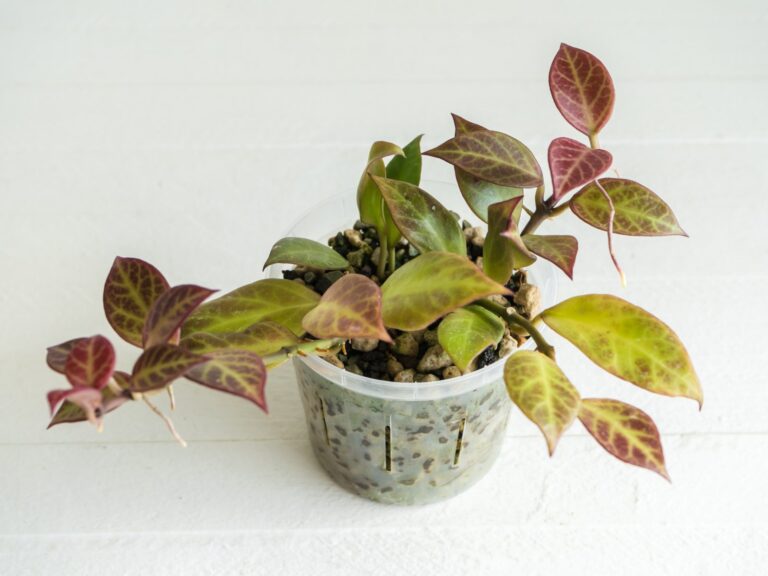 Hoya ‘Sunrise’View photo detailsClose photo details
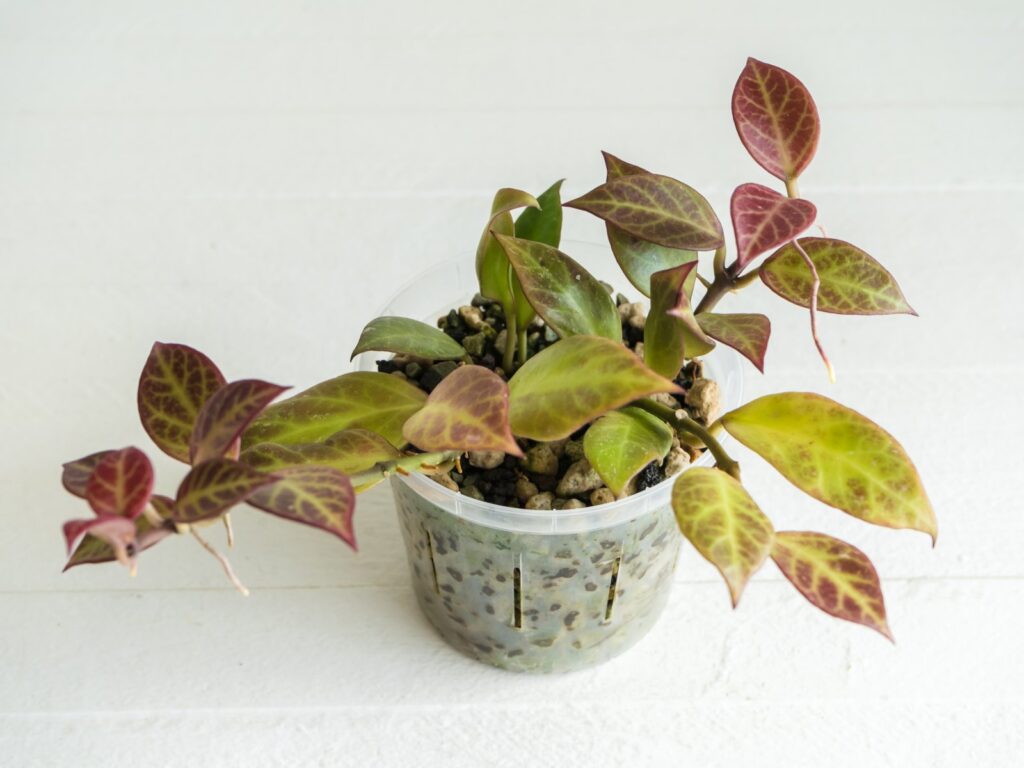
Foliage of cultivated material labelled Hoya Sunrise, showing green, bronze and reddish leaves. Label identity has not been independently authenticated. Photograph by Rebecca Baron.
Photographer or creator: Rebecca Baron
Identification basis: Cultivated material labelled Sunrise; clone continuity has not been independently authenticated.
Rights and reuse: © Rebecca Baron. Displayed by permission on this Growing Profile. Resized for the web. Further reuse requires permission.
Image record: IMG-000210
What We Know
- Reported breeding and naming: The registrar attributes a 1992 hand cross to Michael Miyashiro and establishment of the name in 2004 to Carol Noel. The 2007 Stemma account instead specifies lacunosa var. pallidiflora in its reported parentage. These are attributed histories; the original breeding records have not been examined here.
- Reported habit and appearance: The registrar describes a compact, trailing or creeping plant, elliptic leaves that can bronze, and reflexed white flowers with a yellow-green corona and possible pink coloration. These descriptions require comparison with traceable material and do not establish a light prescription.
- Name standard: The registrar reports the earlier Noel #002 specimen as non-extant and designates a replacement photograph in Asklepios 91, page11. That cited original has not been inspected here.
- Living labels: The registrar warns that at least two cultivated entities circulate as Sunrise, with only one matching its standard. A sale label or similar red foliage therefore cannot establish that a plant represents the accepted cultivar.
What We Are Still Learning
What does the original 2004 publication establish?
What would help: Asklepios 91, pages11–14, especially page11 and the designated photograph; the existing source lead remains open.
Which accessions match the name standard and breeding history?
What would help: Documented living accessions, original distribution records and a comparison with the designated standard.
How do the differently labelled plants differ?
What would help: Traceable material compared for leaves, flowers and growth through propagation cycles under recorded conditions.
Does the reported habit or coloration support a specific growing insight?
What would help: Qualifying scientific evidence with identified material, conditions, appropriate comparisons and limits; current descriptions alone are insufficient.
Common Misconceptions
- An accepted cultivar name does not authenticate every plant sold with that label.
- Bronzed or red foliage alone does not identify Sunrise.
- A registrar description does not establish an experimental care requirement.
Research and Sources
Help answer this profile’s questions
Can you help connect this name to documented material? Original labels, acquisition and propagation records, dated flower photographs and the missing original records would help answer the questions above.
Contribute evidence for this profile