Hoya pubicalyx
A Philippine climbing Hoya with elongated leaves and clusters of fragrant flowers.
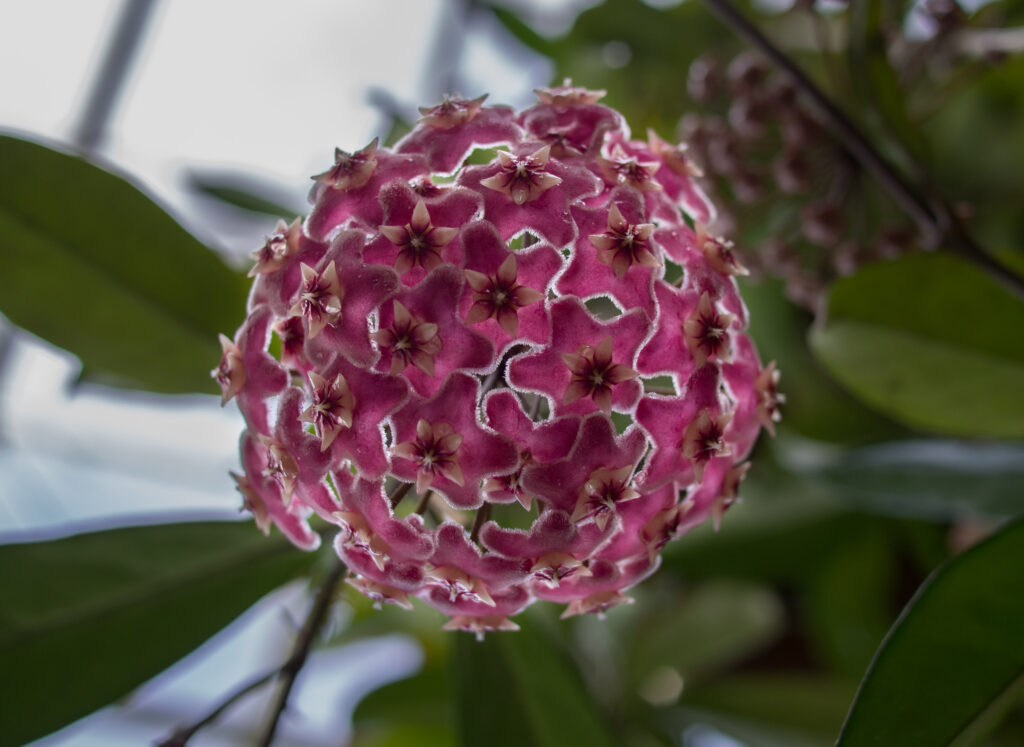
Photo details
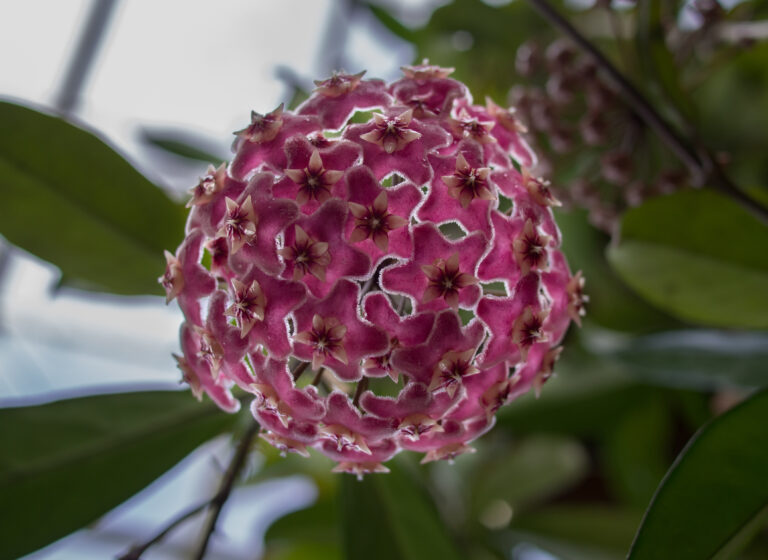
Flowers identified as Hoya pubicalyx at the New York Botanical Garden, photographed on 17 March 2018.
Photo: Rhododendrites, “Hoya pubicalyx (70219)”, Wikimedia Commons, CC BY-SA 4.0; resized for display.
Reuse: CC BY-SA 4.0; attribution and ShareAlike apply. Resized for display.
Identification: Photographer/source identification as Hoya pubicalyx; no verified cultivated form, accession or type identity inferred.
Overview
Hoya pubicalyx is an accepted Philippine species that grows as a climbing vine, with fleshy, elongated leaves and rounded clusters of fragrant flowers. Cultivated plants can have silver-speckled foliage and flowers in shades of pink to deep red. Elmer D. Merrill first described the species in 1918. It is native to the Philippines, with published records from Luzon and Siargao.
Quick Facts
Taxonomic status
Accepted
Source and scope
Name first published
Merrill (1918) first published the name.
Name meaning
Pubicalyx refers to a hairy calyx—the small outer parts of the flower.
Naming evidence and limits
The botanical reference explains the epithet by the pubescent sepals. Merrill’s own naming intention has not been established.
High for attributed botanical-reference explanation; original author rationale unresolved
Pronunciation
HOY-ah pew-bi-KAY-liks. An English pronunciation guide; capitals mark the stressed syllables. Other pronunciation conventions are also used.
Source and scope
NC State’s English pronunciation, rather than a universal requirement for botanical Latin. Name origin and pronunciation are recorded separately.
Native region
Philippines: Luzon in Merrill (1918), and Siargao in Cortez et al. (2023).
Natural habitat
Merrill (1918) recorded it on trees along streams in damp forest; Cortez et al. (2023) also report it on mangrove trees.
Growth habit
Merrill (1918) described a climbing plant.
Leaves
Merrill (1918) described paired, fleshy, elongated leaves.
Sap / latex
Descriptions disagree. NParks reports milky or white sap, while Randal describes clear or yellowish sap for section Hoya, a group in which he includes pubicalyx. Sap colour should not be used alone to identify this species.
Source and scope
One source is a species account and the other a section-level description. They do not establish why the descriptions differ or whether sap varies with organ, conditions or cultivated material. Documented observations of identified plants would help.
Flowers
Merrill (1918) described rounded clusters of flowers.
Fragrance
Merrill (1918) described the flowers as fragrant.
What would you add?
Photo Gallery
 Hoya pubicalyxView photo detailsClose photo details
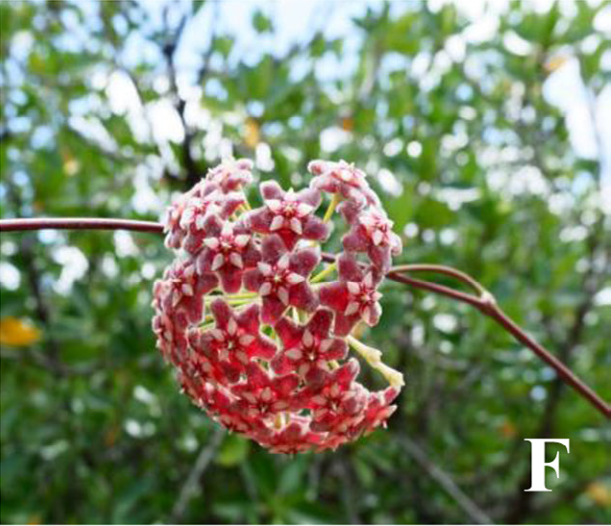
Flowers identified as Hoya pubicalyx in Del Carmen, Siargao, by Cortez and colleagues (2023). Cropped from Figure 3F.
Photo: Cortez et al. (2023), Check List 19(6):983–1011, Figure3F. CC BY4.0; cropped.
Reuse: CC BY 4.0; cropped. Attribution required.
Identification: Source-identified field flowers; no claim of type, independently authenticated accession, cultivated clone or form identity.
Image source · Rights and reuse terms
Image record: IMG-000186
 Hoya pubicalyxView photo detailsClose photo details
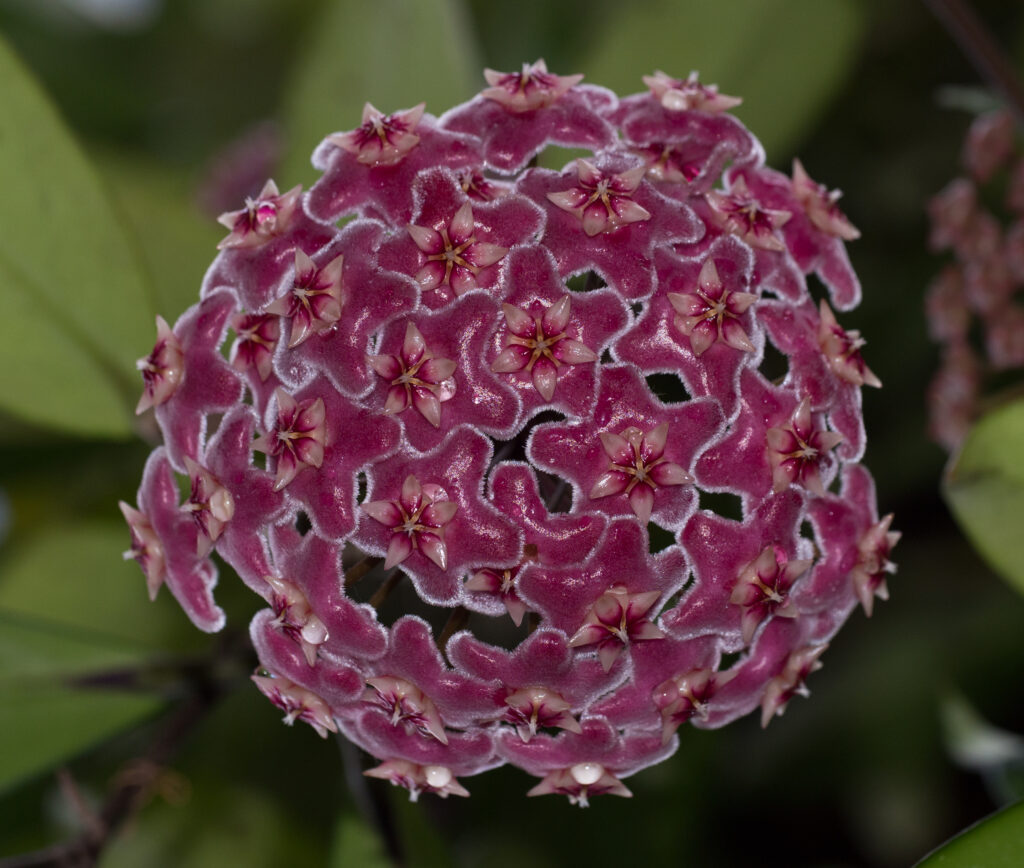
Flowers identified as Hoya pubicalyx at the New York Botanical Garden, photographed by Rhododendrites on 17 March 2018.
Photo: Rhododendrites, “Hoya pubicalyx (70261)”, Wikimedia Commons, CC BY-SA 4.0; resized for display.
Reuse: CC BY-SA 4.0; attribution and ShareAlike apply. Resized for display.
Identification: Photographer/source identification as Hoya pubicalyx; cultivated specimen at New York Botanical Garden; no verified cultivar, accession or type identity inferred.
Image source · Rights and reuse terms

Image record: IMG-000187
 Hoya pubicalyxView photo detailsClose photo details
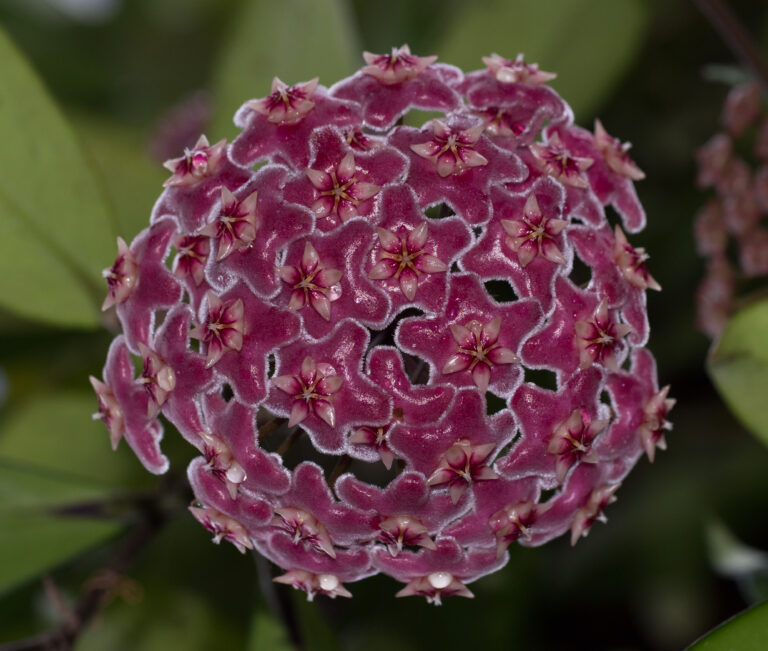
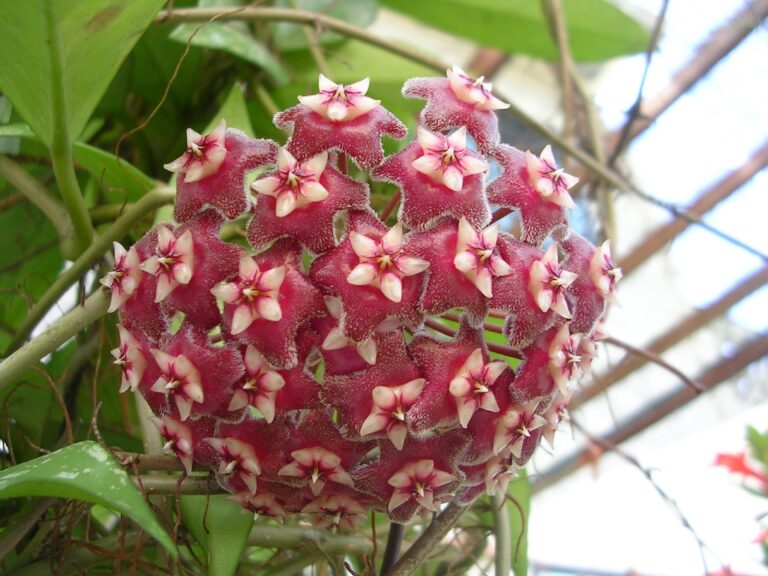
Flowers identified as Hoya pubicalyx at the New York Botanical Garden, photographed on 17 March 2018.
Photo: Rhododendrites, “Hoya pubicalyx (70219)”, Wikimedia Commons, CC BY-SA 4.0; resized for display.
Reuse: CC BY-SA 4.0; attribution and ShareAlike apply. Resized for display.
Identification: Photographer/source identification as Hoya pubicalyx; no verified cultivated form, accession or type identity inferred.
Image source · Rights and reuse terms

Image record: IMG-000188
 Hoya pubicalyxView photo detailsClose photo details
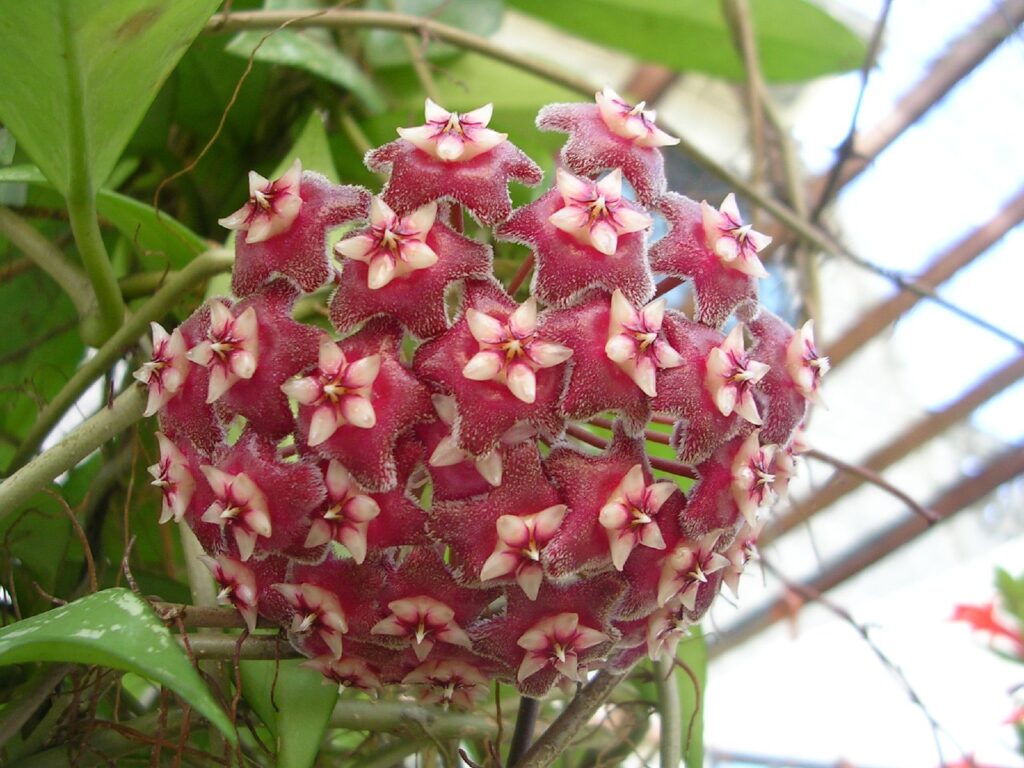
Flower cluster identified as Hoya pubicalyx in the source record, photographed by Athene Rafie in December 2006.
Photo: Athene Rafie, “Hoya Flowers”, Wikimedia Commons, CC BY 2.0; resized for display.
Reuse: CC BY 2.0; attribution apply. Resized for display.
Identification: Photographer/source identification as Hoya pubicalyx; no verified cultivated form, accession or type identity inferred.
Image source · Rights and reuse terms

Image record: IMG-000189
 Hoya pubicalyxView photo detailsClose photo details
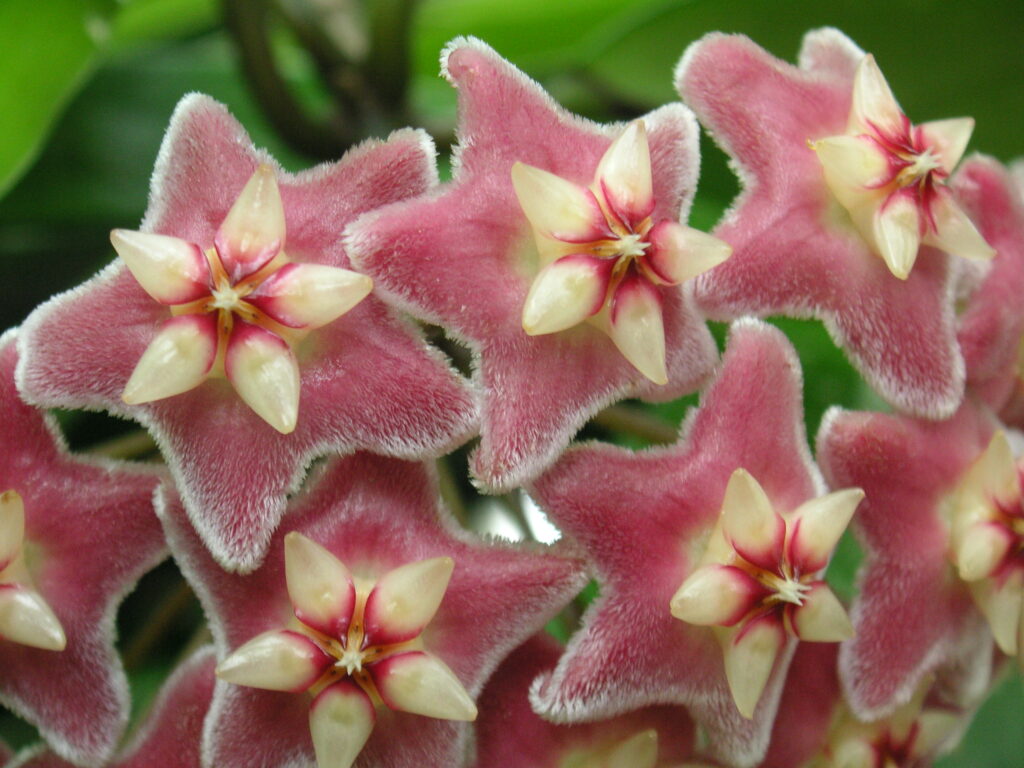
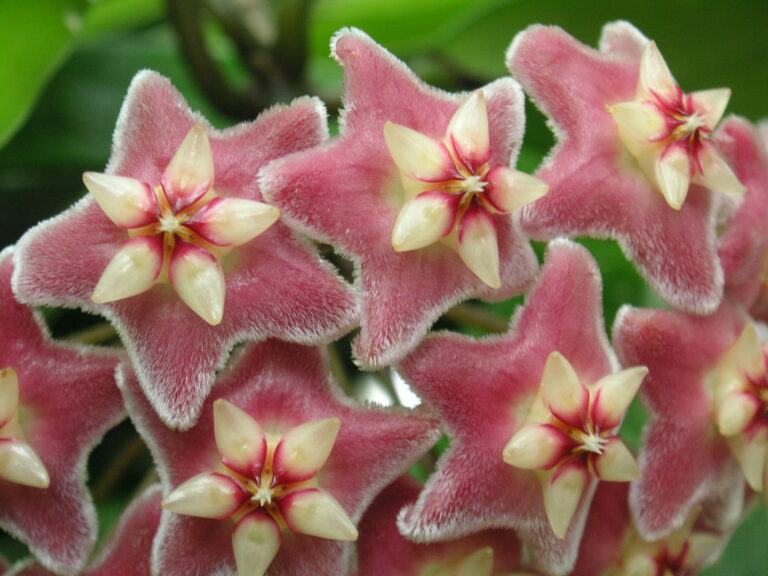
Close-up of flowers identified as Hoya pubicalyx at the Conservatory of Flowers, San Francisco, 30 June 2007.
Photo: Beatrice Murch, “Close up of fuzzy pink flowers - Hoya”, Wikimedia Commons, CC BY-SA 2.0; resized for display.
Reuse: CC BY-SA 2.0; attribution and ShareAlike apply. Resized for display.
Identification: Source identification as Hoya pubicalyx; cultivated specimen, no verified cultivar, accession or type identity inferred.
Image source · Rights and reuse terms

Image record: IMG-000191
 Hoya pubicalyxView photo detailsClose photo details
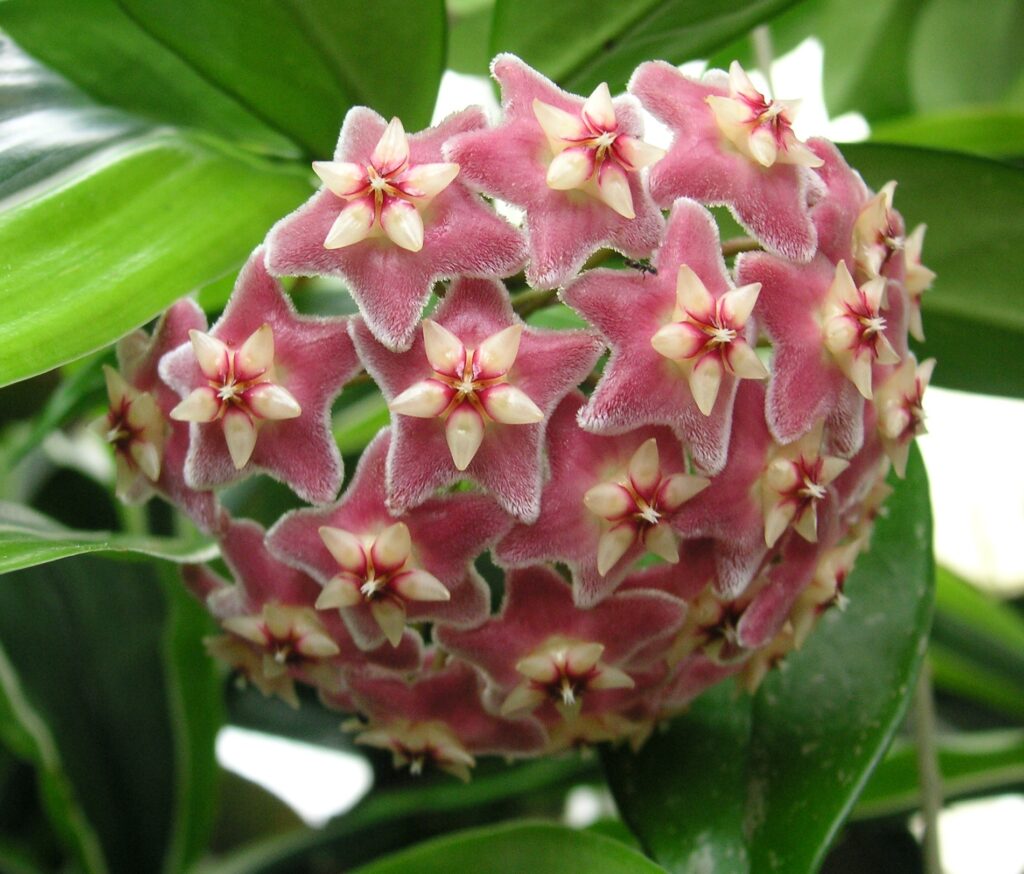
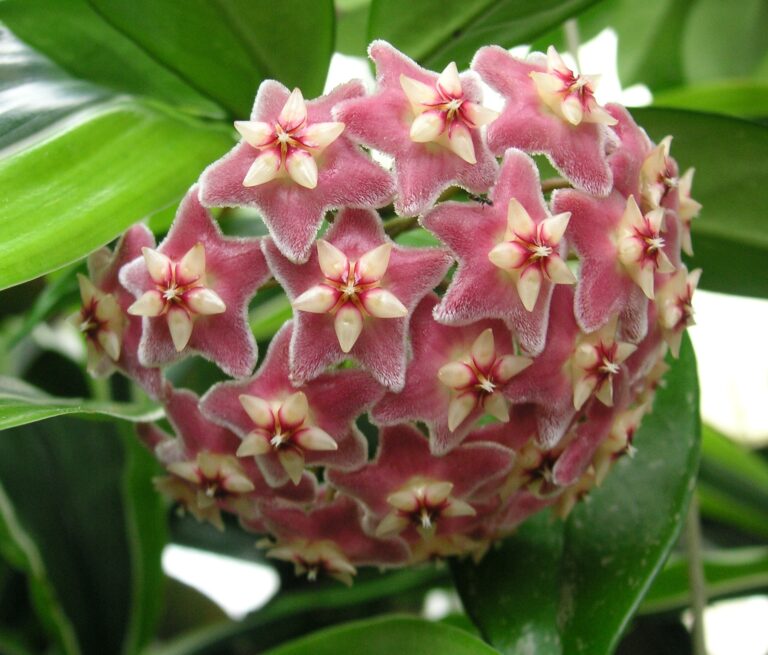
Flower cluster identified as Hoya pubicalyx in the source record, photographed by Beatrice Murch on 30 June 2007.
Photo: Beatrice Murch, “Fuzzy star flowers - Hoya”, Wikimedia Commons, CC BY-SA 2.0; resized for display.
Reuse: CC BY-SA 2.0; attribution and ShareAlike apply. Resized for display.
Identification: Source identification as Hoya pubicalyx; cultivated specimen, no verified cultivar, accession or type identity inferred.
Image source · Rights and reuse terms

Image record: IMG-000192
 Hoya pubicalyxView photo detailsClose photo details
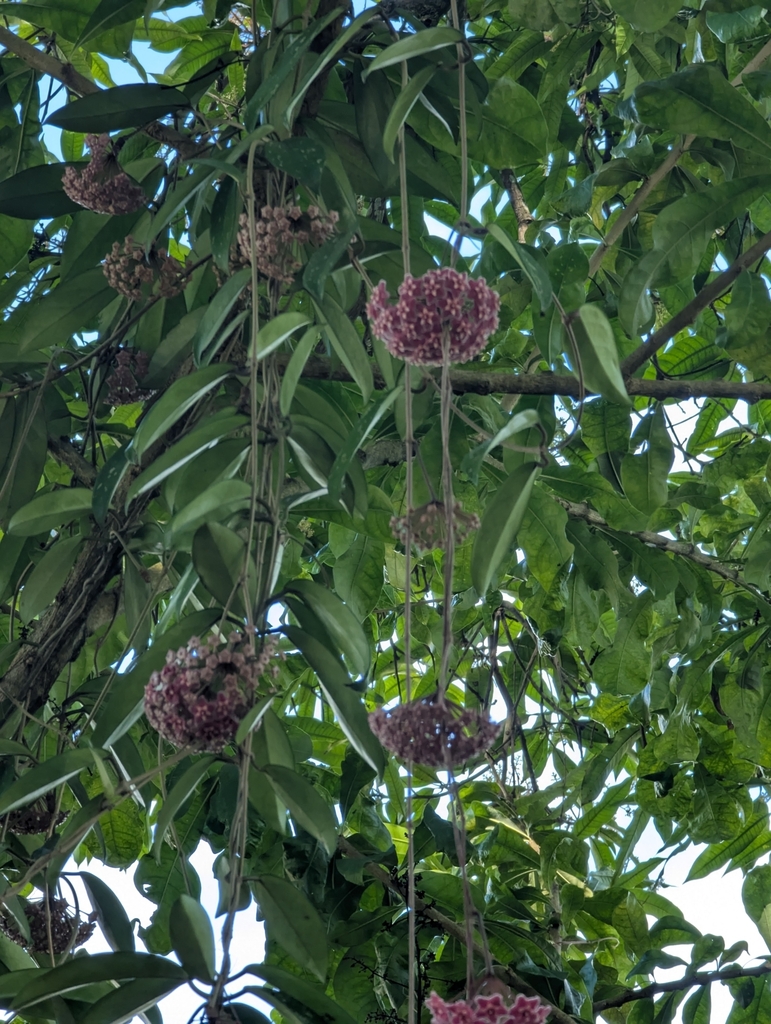
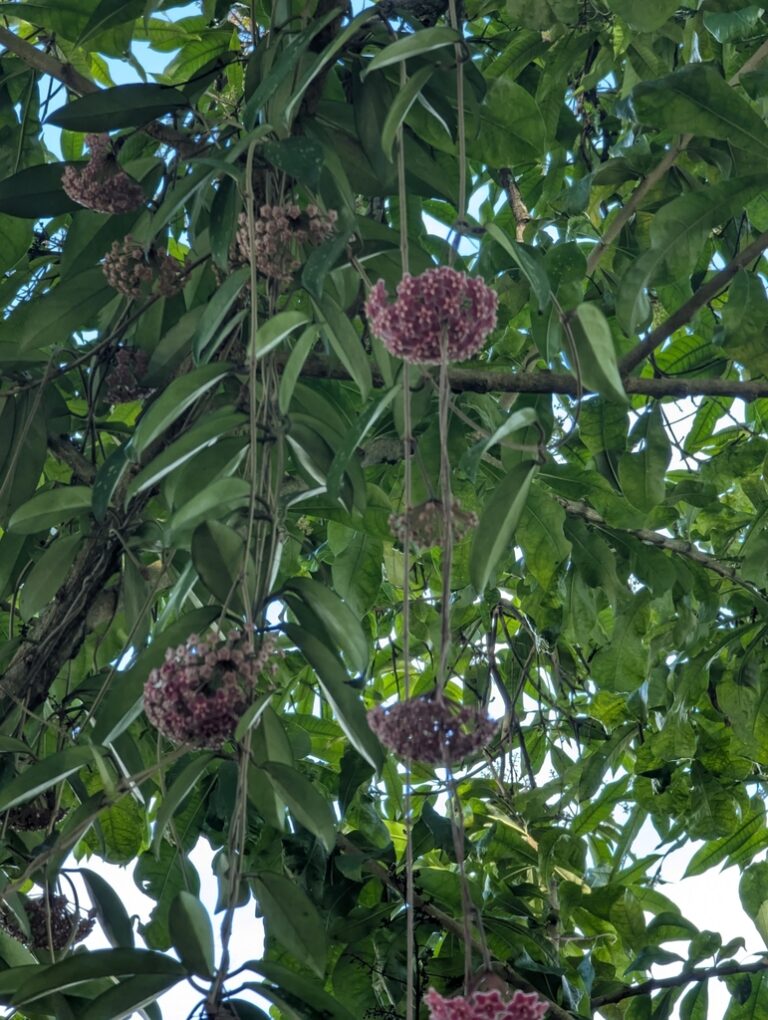
Green foliage and flower clusters of a plant identified as Hoya pubicalyx on iNaturalist, photographed 15 February 2025.
Photo: Nick Kleinschmidt, iNaturalist photo 470335999, CC BY 4.0; full frame, resized for display.
Reuse: CC BY 4.0; attribution required; full frame, resized for display.
Identification: Identified as Hoya pubicalyx by the iNaturalist community. Species, clone and cultivated-form identities have not been independently authenticated.
Image source · Rights and reuse terms
Image record: IMG-000199
 Hoya pubicalyxView photo detailsClose photo details
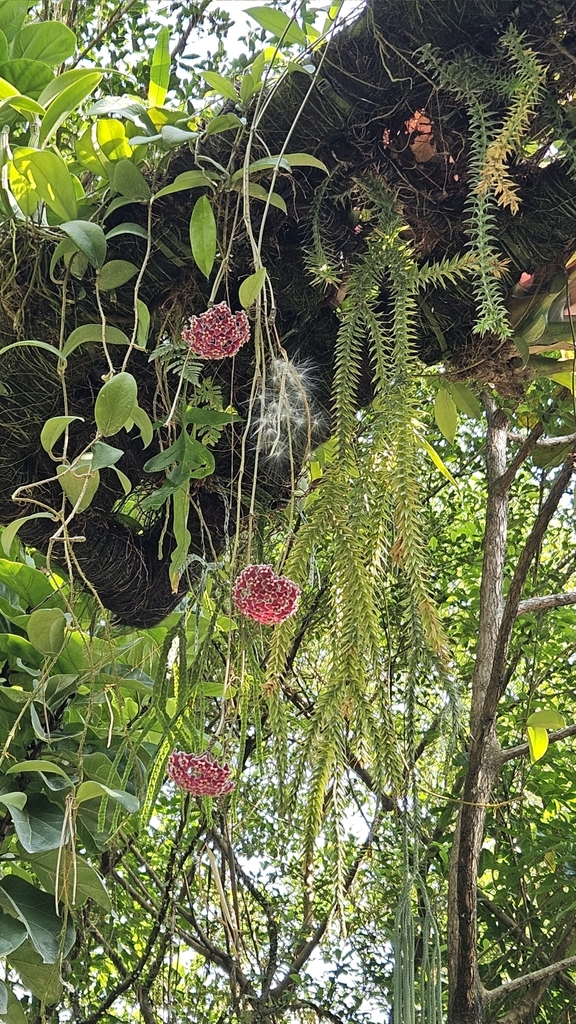
Green foliage and flower clusters of a plant identified as Hoya pubicalyx on iNaturalist, photographed 1 September 2024.
Photo: Cheongweei Gan, iNaturalist photo 428495480, CC BY 4.0; full frame, resized for display.
Reuse: CC BY 4.0; attribution required; full frame, resized for display.
Identification: Identified as Hoya pubicalyx by the iNaturalist community. Species, clone and cultivated-form identities have not been independently authenticated.
Image source · Rights and reuse terms
Image record: IMG-000200
Forms and Growing Profiles
Commercial forms
Cultivated labels include Splash, Royal Hawaiian Purple, Albo Splash and Pink Silver Ghost. Our dated working inventory also records historical labels, study variants, affinity identifications and hybrids; it is not a list of equivalent or accepted forms. The cultivar registrar distinguishes Silver Pink from the trade designation Pink Silver and treats Red Buttons as a hybrid cultivar. Other recorded names include Bright One, Fresno Beauty, Dapple Gray, Jungle Garden, Reva, Silver Leaf and Philippine Black. Matching names or silver markings do not establish that plants are the same selection.
Explore documented cultivated material and other selling labels. A label alone does not establish different care.
Growing Profiles
Hoya pubicalyx — Albo SplashDescriptive cultivated label; relationship to named selections unresolved
A separate guide to Albo Splash labels and the unresolved relationship to Royal Hawaiian Purple.
A dedicated profile follows the published accounts and their limits.
Sources for this name:
- Hoya Publicalyx Albo Splash – seller label — Product heading: Albo Splash
Hoya ‘Bright One’Registrar-reported accepted cultivar; parentage unresolved
Bright One has an established naming record and a historical grower account. Its reported behaviour is distinct from a proven identity or a universal care rule.
Sources for this name:
- Kloppenburg & Wayman (1992) — The Hoya Handbook — Picture29
- Epiflora (2004) — Hoyas in Flower: Hoya pubicalyx — Printed8–9, named cultivars
Hoya pubicalyx — ChimeraHistorical cultivated-name usage; genetic mechanism and equivalence unresolved
A guide to the conflicting use of Chimera in pubicalyx literature and its relationship to Royal Hawaiian Purple.
A dedicated profile follows the published accounts and their limits.
Sources for this name:
- Kloppenburg & Wayman (1992) — The Hoya Handbook — Printed89, named Chimera account
- Wayman (2004) — Hoya pubicalyx cultivated colour variation — Wayman account, printed8–9 / PDF50–51
- P. S. The Hoyan5(4) – cultivated-name discussion (2006) — PDF9, Royal Hawaiian Purple and Chimera statement
- P. S. The Hoyan8(6) – Royal Hawaiian Purple provenance account (2009) — PDF12, Royal Hawaiian Purple provenance commentary
- Hoya pubicalyx – MyHoyas grower account — Royal Hawaiian Purple/Chimera named link
Hoya pubicalyx — Dapple GrayHistorically described cultivated selection; identity continuity unresolved
A profile of the Dapple Gray descriptions and attributed seedling history, preserving unresolved spelling and material questions.
A dedicated profile follows the published accounts and their limits.
Sources for this name:
- Kloppenburg & Wayman (1992) — The Hoya Handbook — Picture83; printed100
- P. S. The Hoyan5(4) – cultivated-name discussion (2006) — PDF6–7, McDonald seedling account; PDF9, cultivated-name list
Hoya pubicalyx — Fresno BeautyHistorically described cultivated selection; establishment and continuity require review
A historical profile following the published Fresno Beauty description and reported seedling history.
A dedicated profile follows the published accounts and their limits.
Sources for this name:
- Kloppenburg & Wayman (1992) — The Hoya Handbook — Picture4; printed92
- P. S. The Hoyan5(4) – cultivated-name discussion (2006) — PDF6–7, reported Fresno Beauty and Reva seedling history
Hoya pubicalyx — Pink SilverRegistrar-reported trade designation; underlying selection unresolved
Pink Silver has a long selling-name history. The registrar treats it as a trade designation and leaves the underlying selection unresolved.
Sources for this name:
- Hoya cultivar names found, continued – Clark (1997 reprint) — Issue2 printed3 / PDF25
- Kloppenburg & Wayman (1992) — The Hoya Handbook — Picture41
- Hoya pubicalyx – MyHoyas grower account — Main account and Pink Silver link
- Epiflora (2004) — Hoyas in Flower: Hoya pubicalyx — Printed8–9, named cultivars
Hoya pubicalyx — Plain-leaved study variantSource-documented study material; modern cultivated identity unresolved
The plain-leaved, maroon-flowered material compared with a silver-speckled variant in a 2004 thesis abstract.
A dedicated profile follows the published accounts and their limits.
Sources for this name:
- Redondo (2004) — Comparative karyotypes of two Hoya pubicalyx variants — Repository abstract; comparative karyotype study dated2004-10
Hoya ‘Red Buttons’Registrar-reported established hybrid cultivar; individual accessions require provenance
The registrar and historical publications document Red Buttons, its reported origin and its distinction from species-level pubicalyx.
A dedicated profile follows the published accounts and their limits.
Sources for this name:
- Red Buttons – ICRA hybrid cultivar entry — Status, originator, category and parentage discussion
- Kloppenburg & Wayman (1992) — The Hoya Handbook — Picture28; printed94–95
- Liddle (2009) — nursery catalogue — Catalogue p.8, IML0268
Hoya pubicalyx — RevaHistorically reported named seedling; parentage and continuity unresolved
A source-attributed account of Reva’s reported naming and relationship to Fresno Beauty.
A dedicated profile follows the published accounts and their limits.
Sources for this name:
- P. S. The Hoyan5(4) – cultivated-name discussion (2006) — PDF6–7, reported sister-seedling account; PDF9, Reva naming statement
Hoya pubicalyx — Royal Hawaiian PurpleDocumented cultivated name; living-material continuity unresolved
Published accounts document Royal Hawaiian Purple and its naming history. This profile follows those accounts and the unresolved use of Chimera.
A dedicated profile documents the nursery accession,naming history and conflicting Chimera usage. Modern clone continuity and the relationship to Albo Splash remain unresolved.
Sources for this name:
- Hoya pubicalyx – MyHoyas grower account — Main account and named cultivated links
- P. S. The Hoyan8(6) – Royal Hawaiian Purple provenance account (2009) — PDF12, provenance account
- Liddle (2009) — nursery catalogue — Catalogue p.8, IML0056 Royal Hawaiin Purple
- P. S. The Hoyan5(4) – cultivated-name discussion (2006) — PDF9, Royal Hawaiian Purple and Chimera naming statement
- Red Buttons – ICRA hybrid cultivar entry — 1998 publication note: reported earlier Hawaiian Royal Purple wording
Hoya pubicalyx ‘Silver Pink’Registrar-reported accepted cultivar; material continuity unresolved
The registrar recognizes Silver Pink and distinguishes it from Pink Silver. This profile follows the name and its documentary limits.
Recorded source: Cultivar registrar; historical source disagreements retained
Hoya pubicalyx — silver-speckled study variantSource-documented study variant; cultivated identity unresolved
A 2004 thesis abstract distinguishes this variant by silver-speckled leaves and red flowers. It does not establish a cultivar name, modern material identity, or form-specific care conclusion.
Hoya pubicalyx — SplashDescriptive cultivated material; clone identities unresolved
A descriptive profile for Splash-related labels and silver-marked foliage. It preserves received names without treating them as one clone or assigning separate care.
Sources for this name:
- Hoya pubicalyx – MyHoyas grower account — Main account, variable silver markings among named cultivated plants
Other names used in cultivation
Albo AH White CrownIdentity unresolved
The catalogue label is retained as reported. Cultivar establishment, stability and propagation history remain unresolved.
AlbomarginataCommercial variegation descriptor
The seller records this label separately. It is not treated as an established alias of Albo Splash.
Bold OneHistorical name; asterisk flags carnosa/hybrid/confusion possibilities
The documented label is retained separately. Present material, cultivar status and claimed aliases require continuity evidence.
Sources for this name:
- Hoya cultivar names found, continued – Clark (1997 reprint) — Issue2 printed2–3 / PDF24–25, exact name entry
ChimaeraLiteral spelling grouped by compiler; no canonical alias merge
The compiler groups this spelling with other names. The spelling and grouping are preserved without accepting material equivalence.
Sources for this name:
- Hoya cultivar names found, continued – Clark (1997 reprint) — Issue2 printed2–3 / PDF24–25, exact name entry
ChimearaLiteral spelling grouped by compiler; no canonical alias merge
The compiler groups this spelling with other names. The spelling and grouping are preserved without accepting material equivalence.
Sources for this name:
- Hoya cultivar names found, continued – Clark (1997 reprint) — Issue2 printed2–3 / PDF24–25, exact name entry
Cream OneIdentity unresolved
The documented label is retained separately. Present material, cultivar status and claimed aliases require continuity evidence.
Sources for this name:
- Hoya cultivar names found, continued – Clark (1997 reprint) — Issue2 printed2–3 / PDF24–25, exact name entry
Dapple GreyHistorical spelling; duplicate-name question
Community records discuss conflicting carnosa and pubicalyx applications of Dapple Grey/Gray. Spelling resemblance does not resolve material identity.
Dark Red SeedlingIdentity unresolved
The documented label is retained separately. Present material, cultivar status and claimed aliases require continuity evidence.
Sources for this name:
- Hoya cultivar names found, continued – Clark (1997 reprint) — Issue2 printed2–3 / PDF24–25, exact name entry
Gold StarComparison-only McDonald seedling; pubicalyx parentage unestablished
This name occurs in the wider McDonald seedling discussion. The source does not establish pubicalyx parentage; it remains comparison material.
Sources for this name:
- P. S. The Hoyan5(4) – cultivated-name discussion (2006) — PDF6–7 or9, exact name entry
Grey LadyHistorical spelling; not merged with Dapple Grey or Gray Lady
The documented label is retained separately. Present material, cultivar status and claimed aliases require continuity evidence.
Sources for this name:
- Hoya cultivar names found, continued – Clark (1997 reprint) — Issue2 printed2–3 / PDF24–25, exact name entry
Hawaiian Royal PurpleRegistrar-reported historical name; material continuity pending
The registrar reports this earlier name in connection with current Royal Hawaiian Purple. The inventory retains the source attribution and unresolved material continuity.
Jungle GardenHistorical/grower label
The grower uses this label. It remains separate from similarly named selections unless their material continuity can be demonstrated.
Sources for this name:
- Hoya pubicalyx – MyHoyas grower account — Main account and named cultivated links
Jungle GreenDisputed selling name; not silently corrected to Jungle Garden
The documented label is retained separately. Present material, cultivar status and claimed aliases require continuity evidence.
Sources for this name:
- P. S. The Hoyan5(4) – cultivated-name discussion (2006) — PDF6–7 or9, exact name entry
LeenieHistorical name; biographical naming explanation attributed
The documented label is retained separately. Present material, cultivar status and claimed aliases require continuity evidence.
Sources for this name:
- P. S. The Hoyan5(4) – cultivated-name discussion (2006) — PDF6–7 or9, exact name entry
Little LeafIdentity unresolved
The grower uses this label. It remains separate from similarly named selections unless their material continuity can be demonstrated.
Sources for this name:
- Hoya pubicalyx – MyHoyas grower account — Main account and named cultivated links
Little OneComparison-only McDonald seedling; pubicalyx parentage unestablished
This name occurs in the wider McDonald seedling discussion. The source does not establish pubicalyx parentage; it remains comparison material.
Sources for this name:
- P. S. The Hoyan5(4) – cultivated-name discussion (2006) — PDF6–7 or9, exact name entry
Little StarComparison-only McDonald seedling; pubicalyx parentage unestablished
This name occurs in the wider McDonald seedling discussion. The source does not establish pubicalyx parentage; it remains comparison material.
Sources for this name:
- P. S. The Hoyan5(4) – cultivated-name discussion (2006) — PDF6–7 or9, exact name entry
Philippine BlackIdentity unresolved
Clark groups this label with Chimera spellings. That historical grouping is preserved as an assertion rather than an accepted clone match.
Sources for this name:
- Hoya cultivar names found, continued – Clark (1997 reprint) — Issue2 printed2–3 / PDF24–25, exact name entry
Pink OneHistorical label; mixed carnosa/pubicalyx/hybrid context
The documented label is retained separately. Present material, cultivar status and claimed aliases require continuity evidence.
Sources for this name:
- Hoya cultivar names found, continued – Clark (1997 reprint) — Issue2 printed2–3 / PDF24–25, exact name entry
Pink Silver GhostIdentity unresolved
Seller and collection records use this label. It has not been equated with Pink Silver, Silver Pink or Silver Ghost in this inventory.
Sources for this name:
- Hoya Mother Plants – bounded pubicalyx label occurrences — Mother-plant list, M–P
- Hoya Publicalyx Pink Silver Ghost – seller label — Product heading
Pretty OneHistorical label; conflicting carnosa and pubicalyx applications
The documented label is retained separately. Present material, cultivar status and claimed aliases require continuity evidence.
Sources for this name:
- Hoya cultivar names found, continued – Clark (1997 reprint) — Issue2 printed2–3 / PDF24–25, exact name entry
aff. pubicalyx (HSI-037)Identity unresolved
The catalogue uses an affinity identification rather than a confirmed species or cultivar identity. Retain its accession context.
Purple HybridIdentity unresolved
The catalogue records this label with IML0049. The wording does not establish a verified crossing formula or equivalence to another selection.
Red ButtonSource spelling; possible relation to Red Buttons requires evidence
The grower uses this label. It remains separate from similarly named selections unless their material continuity can be demonstrated.
Sources for this name:
- Hoya pubicalyx – MyHoyas grower account — Main account and named cultivated links
Red Buttons SeedlingUnnamed Miyashiro seedling label; not equated with Red Buttons
The documented label is retained separately. Present material, cultivar status and claimed aliases require continuity evidence.
Sources for this name:
- P. S. The Hoyan5(4) – cultivated-name discussion (2006) — PDF6–7 or9, exact name entry
RHP AlboIdentity unresolved
A mother-plant list records this label. It is not merged with Royal Hawaiian Purple or Albo Splash.
Sources for this name:
- Hoya Mother Plants – bounded pubicalyx label occurrences — Mother-plant list, M–P
RHP Albo SplashIdentity unresolved
The seller uses RHP Albo Splash in the product heading. The abbreviated label is retained separately from RHP Albo and Albo Splash; material continuity remains unverified.
Royal Hawaiian Purple (outer variegated, splash)Identity unresolved
The seller combines Royal Hawaiian Purple with outer variegated and splash. This label occurrence does not establish that all Albo Splash plants share this identity.
RubraHistorical caption label
This is the label applied to a photograph in the society account. Its relationship to other cultivated names remains unresolved.
Sources for this name:
- Epiflora (2004) — Hoyas in Flower: Hoya pubicalyx — Printed6–7, Rubra caption
Silver KnightReported wholesaler label; claimed Pink Silver equivalence unverified
Historical sources associate this selling label with other named material. Those associations remain attributed and do not identify present plants.
Sources for this name:
- P. S. The Hoyan5(4) – cultivated-name discussion (2006) — PDF6–7 or9, exact name entry
Silver LeafIdentity unresolved
Liddle lists Silver Leaf separately. Earlier accession and naming accounts differ; the inventory does not equate the name with Silver Pink or Pink Silver.
Silver PrinceHistorical selling label; Burton reports Pink Silver application, attributed only
Historical sources associate this selling label with other named material. Those associations remain attributed and do not identify present plants.
Sources for this name:
- Hoya cultivar names found, continued – Clark (1997 reprint) — Issue2 printed2–3 / PDF24–25, exact name entry
Spotted LeafHistorical slash-grouped selling label; no continuity established
Historical sources associate this selling label with other named material. Those associations remain attributed and do not identify present plants.
Sources for this name:
- Hoya cultivar names found, continued – Clark (1997 reprint) — Issue2 printed2–3 / PDF24–25, exact name entry
Super SplashIdentity unresolved
Two seller records use Super Splash and emphasize silver markings. Seller terminology and comparisons do not establish one clone, a shared origin, a standard splash threshold or separate care.
Sweet OneComparison-only McDonald seedling; pubicalyx parentage unestablished
This name occurs in the wider McDonald seedling discussion. The source does not establish pubicalyx parentage; it remains comparison material.
Sources for this name:
- P. S. The Hoyan5(4) – cultivated-name discussion (2006) — PDF6–7 or9, exact name entry
Research
Where It Grows
Hoya pubicalyx is native to the Philippines, with reports from Luzon, Polillo, Samar, Dinagat and Siargao.
Reported native distribution
Regions shown and how to read the map
Native: Luzon; Polillo; Samar; Dinagat; Siargao.
The island list follows Co’s Digital Flora of the Philippines. Its Luzon records include Isabela and Quezon; these province names are retained in the underlying evidence rather than treated as extra islands.
Kew’s Plants of the World Online still summarizes the range as Luzon. That narrower summary is retained as a difference between sources; it does not establish absence from the additional islands listed by the Philippine flora.
The map shows reported native islands, not occurrence throughout each island. Additional herbarium labels are not automatically accepted or added without a separate identification and provenance check.
These are simplified TDWG plant-distribution boundaries, not a habitat model or surveyed range edge. Neutral areas are background context; they do not establish absence. Distribution adapted from Co’s Digital Flora of the Philippines; boundary geometry from TDWG WGSRPD, with simplified outlines and added labels. View the distribution account.
Natural Habitat
Merrill described the original material growing on trees along streams in damp forest. The Siargao study reports plants on mangrove trees. Together, these accounts show the importance of the plant’s supporting trees and local forest setting.
A mangrove-associated record does not establish that cultivated plants need salty water, flooded roots or a particular household humidity. Neither account tests those growing conditions.
Publication and naming history
Merrill’s article appeared in Volume XIII, No. 5 (September 1918). The heading “HOYA PUBICALYX sp. nov. § Euhoya” begins on printed p. 331; the Latin diagnosis and English account continue on p. 332.
- Merrill (1918) — New or Noteworthy Philippine Plants, XIV — 263–333; Hoya pubicalyx treatment on printed pp. 331–332
- Royal Botanic Gardens, Kew — Hoya pubicalyx status reference (5 October 2026) — Taxon summary; preserved extraction PDF pp.1–2; retrieved 5 October 2026
Historical names explained
The name Hoya pubicalyx was published by Elmer D. Merrill in 1918. The original collection cited there, Bureau of Science 19484, was gathered in 1913. It is distinct from Edaño 3235, the 1948 gathering discussed in the later Hoya pubicorolla account.
The 2013 Hoya New treatment described Hoya pubicorolla and argued that some material previously called pubicalyx had been misidentified. These are published comparisons and identification claims. They do not justify renaming every cultivated pubicalyx without checking the individual plant and the relevant specimens.
The plant, leaves and flowers
Merrill described a climbing shrub with opposite, fleshy, elongated leaves, measuring 10–14 cm long and 3–5 cm wide in his account. Its many-flowered clusters were described as 8–9 cm across, with fragrant flowers about 1.8 cm across.
The Siargao account describes pink to dark-red, fragrant flowers, but prints a leaf length of 10–15 mm. That conflicts with the centimetre-scale leaves in Merrill’s account. The printed value is retained as an unresolved discrepancy rather than silently changed.
Published Philippine records
Merrill’s original description places Hoya pubicalyx at Mauban on Luzon. Co’s Digital Flora lists further Philippine records, including Dinagat, Polillo, Samar and Siargao. These are reported localities, rather than a claim that every plant sold under the name has a documented wild origin.
Cortez and colleagues recorded plants identified as Hoya pubicalyx in Del Carmen on Siargao, with herbarium vouchers cited in their 2023 study. This provides a more recent field record alongside the historical Luzon account.
What the laboratory studies tell us
Panahon and colleagues’ 2016 paper reports isolation of taraxerol, beta-sitosterol and stigmasterol from cultivated material identified as Hoya pubicalyx. The abstract refers to leaves, while the isolation method refers to stems. The paper did not test biological activity, so these results do not demonstrate a medicinal benefit.
Torrefiel and Buot’s 2018 conference abstract compares leaf characters in material named Hoya carnosa, Hoya celata and Hoya pubicalyx. The available abstract gives a limited view of that study; a full paper, vouchers and extended methods have not been established.
Trimanto and Suhartono’s 2019 experiment followed root development in leaf, stem and stem-with-leaf cuttings. The methods name Hoya pubicalyx, while the tables use pubicalix. Its approximately one-month root measurements do not establish long-term shoot growth or complete-plant survival.
Sources
Merrill (1918) — New or Noteworthy Philippine Plants, XIV
Elmer D. Merrill · 1918-09 · Vol. 13 · Issue 5 · Locator: 263–333; Hoya pubicalyx treatment on printed pp. 331–332
Kloppenburg and colleagues (2013) — Hoya pubicorolla and its comparison with Hoya pubicalyx
Dale Kloppenburg, editor; taxonomic authors as printed in the issue · 2013-12 · Locator: Hoya New 1(2):13–24; H. pubicorolla 13–19
Panahon et al. (2016) — Triterpene and sterols from Hoya pubicalyx Merr.
Nelson M. Panahon; Fernando B. Aurigue; Ian van Altena; Consolacion Y. Ragasa · 2016 · Locator: Der Pharmacia Lettre 8(13):270–273
Torrefiel & Buot (2018) — Numerical taxonomy of Hoya section Hoya
Jay Taborada Torrefiel; Inocencio Buot · 2018-06-01 · Locator: ICoSTES 1(1), Basic Sciences; unpaginated abstract
Trimanto & Suhartono (2019) — Cutting materials and Hoya root development
Trimanto; Suhartono · 2019 · Locator: Prosiding Seminar Nasional Biologi 2019 IP2B III:172–177
Cortez et al. (2023) — The mangal flora diversity of Del Carmen Forest on Siargao Island
G.N.G. Cortez and colleagues · 2023-12-07 · Locator: Check List 19(6):983–1011; Hoya Table 1 p.986, Figure 3F p.992 and account p.993
Randal — section Hoya sap characters in Stemma 7(1)
Mark Randal · 2025-06-01 · Locator: Printed p.14 / PDF p.14, paragraph beginning H. fungii belongs to Hoya section Hoya
Co’s Digital Flora — Hoya checklist (12 September 2026 snapshot)
Pieter B. Pelser; Julie F. Barcelona; Daniel L. Nickrent, editors · Locator: Apocynaceae, Hoya pubicalyx entry; snapshot captured 12 September 2026
Hoya Pubicalyx RHP Albo Splash Top cut – RashidasSacredPlace seller record
"RashidasSacredPlace / Palmstreet" · "" · Locator: Product heading; captured17October2026
Hoya pubicalyx Royal Hawaiian Purple outer variegated splash – UPT seller record
"Unsolicited Plant Talks" · "" · Locator: Product heading; captured17October2026
Iowa State Extension — How to Pronounce Scientific Names
Aaron Steil; Iowa State University Extension and Outreach · Undated · Locator: Botanical Latin versus classical Latin; Common Pronunciations
NC State Extension — Hoya pubicalyx name meaning and cultivation guidance
NC State Extension Gardener Plant Toolbox · Locator: Description — opening paragraph (name meaning); care paragraph mentioning deadheading and peduncles
NParks — Hoya pubicalyx sap description
National Parks Board, Singapore · Undated · Locator: Landscaping Features; Usage Hazard - Cons Remarks
Royal Botanic Gardens, Kew — Hoya pubicalyx status reference (5 October 2026)
Royal Botanic Gardens, Kew · Locator: Taxon summary; preserved extraction PDF pp.1–2; retrieved 5 October 2026
What We Still Do Not Know and Contribute
Where is the Edaño 3235 specimen, and what does its history show?
Why it matters: The 1948 Edaño 3235 collection is separate from the material behind Merrill’s 1918 Hoya pubicalyx description. Tracing the specimen and its labels would help clarify the later Hoya pubicorolla account, including questions about what material survives.
Which historical specimens are correctly identified?
Why it matters: A 2013 publication questioned the identification of several preserved specimens labeled Hoya pubicalyx. The reviewed Harvard record documents one specimen’s identification history; it does not resolve every specimen named in that publication.
Can the missing original publications be found?
Why it matters: Some historical pubicalyx and cultivar claims still rely on screenshots. Complete original pages are needed to verify their wording, authorship and context.