Regalis (Compacta)
A border-variegated Compacta cultivar described with persistent red-toned colouring, distinguished historically from Marginalis.
Distinguish Regalis from Marginalis using the corrected historical description, published photographs, naming assessment and conflicting irradiation accounts.
Overview
Regalis is a border-variegated Compacta cultivar whose 1973 patent describes it as a sport of Marginalis. Its reported distinction combines curled leaves with persistent red, red-purple and yellow-red colouring in leaves and other organs. The cultivar registrar treats Regalis and Marginalis as separate established cultivars. These descriptions help distinguish the historical names; living plants still need documented propagation histories.
Related profiles: Marginalis (Compacta) · Compacta Mauna Loa
Photo Gallery
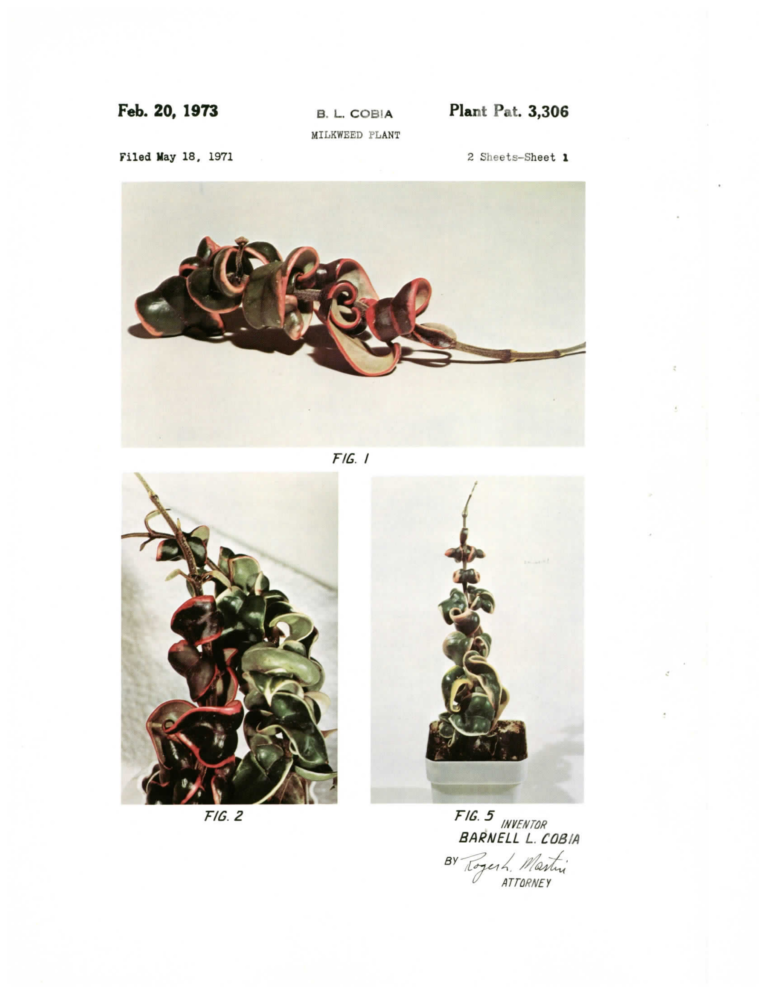 Regalis - 1973 patent habit and comparison plateView photo detailsClose photo details
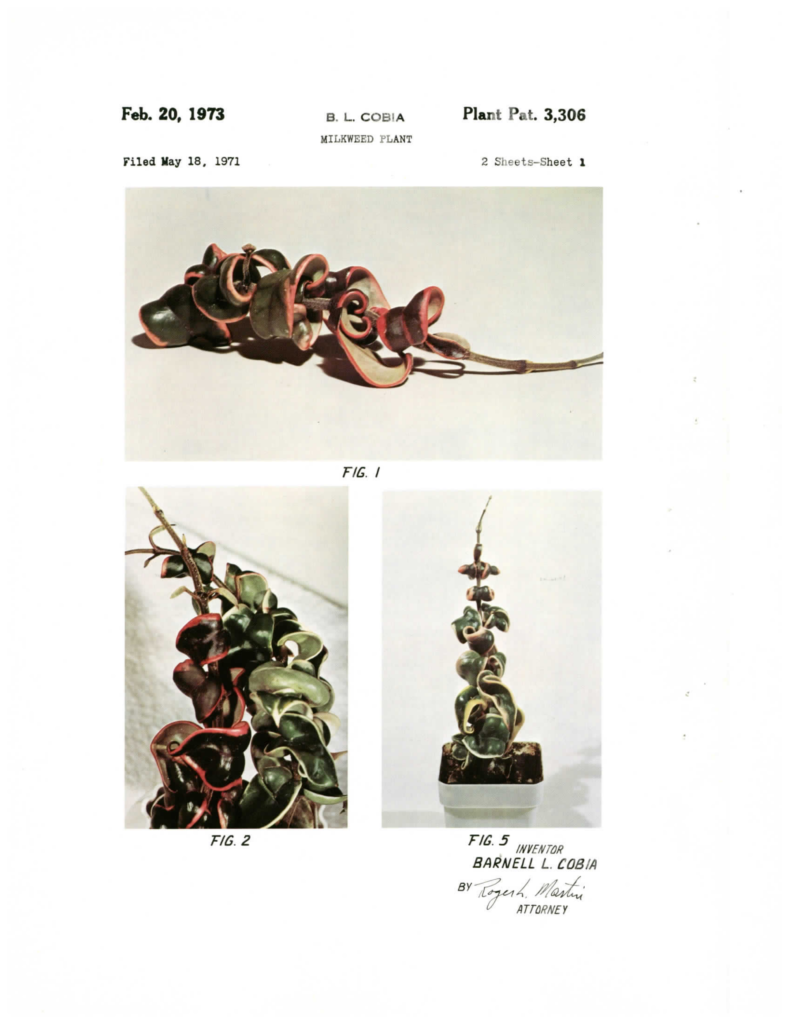
Image source · Rights and reuse terms
Complete first photographic sheet of United States Plant Patent 3,306 (1973), with Figures 1, 2 and 5. Figure 2 includes a comparison with Marginalis, as identified in the patent; it is not a photograph of Regalis alone. The plate documents historical material, not an authenticated modern accession. Printed context retained; native resizing only.
Photographer or creator: United States Plant Patent 3,306 (1973); individual photographer uncredited
Identification basis: Identification by the patent and its figure descriptions; no authenticated modern accession. Figure 2 includes Marginalis as a comparison.
Rights and reuse: Faithful full patent-sheet facsimile under USPTO patent-information guidance. No separate open license asserted for isolated photographs.
Image record: IMG-000022
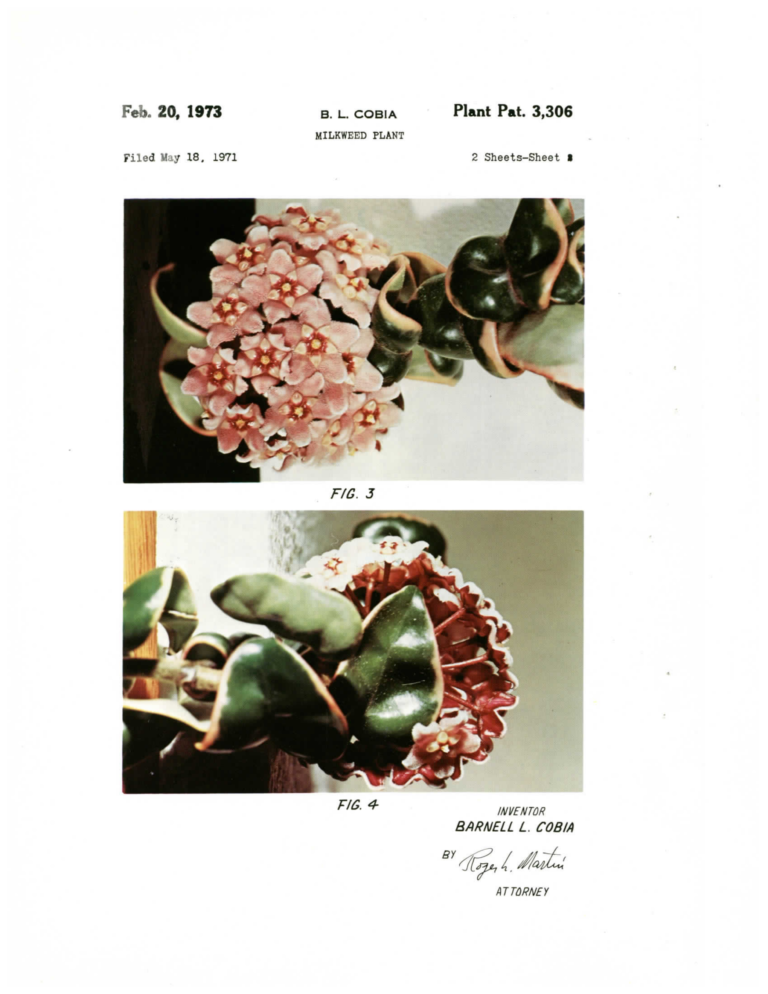 Regalis - 1973 patent flower plateView photo detailsClose photo details
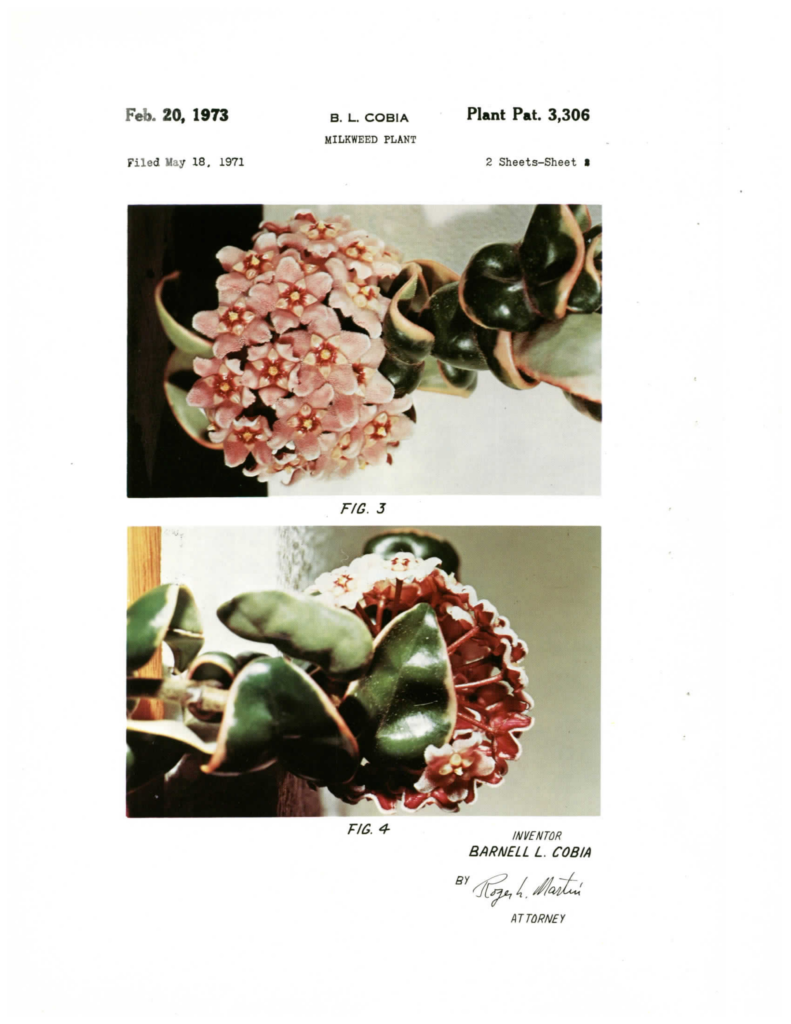
Image source · Rights and reuse terms
Complete second photographic sheet of United States Plant Patent 3,306 (1973), with Figures 3 and 4 showing an inflorescence from two sides. These are historical patent photographs; modern clone continuity is unverified. Printed context retained; native resizing only.
Photographer or creator: United States Plant Patent 3,306 (1973); individual photographer uncredited
Identification basis: Identification by the patent and its figure descriptions; no authenticated modern accession.
Rights and reuse: Faithful full patent-sheet facsimile under USPTO patent-information guidance. No separate open license asserted for isolated photographs.
Image record: IMG-000023
Evidence-Based Growing Insights
No form-specific care conclusion has passed review. The parent Hoya page remains the source for shared information; generic advice is not repeated here.
What We Know
- The Regalis patent reports a sport on cultivated Marginalis and successive propagation through stem cuttings at Winter Garden, Florida (printed col. 2 / original PDF p. 3). This is the inventor’s account of the historical material.
- The leaves are described as curling transversely and backwards from the midrib, exposing the upper blade outward. Their green centres and pale borders carry red-family overcasts described as longer-lasting than in Marginalis; stems, petioles, peduncles and flowers also contribute to the stated distinction (cols. 1–6 / PDF pp. 3–6).
- The described first-year mature blades are usually 30–70 mm long and 20–45 mm wide. Umbels usually contain 20–45 flowers, with individual flowers usually 12–18 mm across. These measurements describe the patent material, rather than universal identification limits for modern plants (cols. 3–6 / PDF pp. 4–6).
- The 3 July 1973 Certificate of Correction supplies five instructions affecting the issued text. Corrected readings control the description, including the affected colour notations (original PDF p. 7).
- The registrar accepts Regalis as an established cultivar name and includes Hoya carnosa Compacta Regalis among its naming equivalents. This concerns the historical name, not the identity of every plant now carrying the label (registrar Name, Status and Established Synonyms fields).
- A 1980 trade report includes a photograph captioned Compacta regalis. Its discussion of proposed European renaming records contemporary trade history; it does not document completed registrations or authenticate modern aliases (printed p. 115 / original PDF p. 1).
- The 1988 newsletter table lists Compacta Regalis with an irradiation attribution, the date 1980(?) and rooted cuttings(?) among its treatment details. Those printed uncertainties remain important, and the date is later than the 1973 patent (printed p. 24 / supplied PDF p. 2).
- The 2025 nursery interview gives a different account: it attributes selection from irradiated material to Krinkle 8 and describes the other nursery releases as natural mutations. This retrospective testimony and the newsletter table do not resolve Regalis’s treatment history without accession-specific records (Stemma 7(1), p. 7).
- The patent’s observations came from fertilized plants under 85% shade in Florida. Its measured examples describe particular plants at stated ages; they do not establish an optimum light level, growth rate or separate care regimen through controlled comparison (col. 7 / PDF p. 6).
What We Are Still Learning
Which living plants have a documented propagation chain to the patented Regalis?
What would help: Original nursery labels, dated acquisition and propagation records, and authenticated descendant material.
How consistently do the distinguishing colours persist in traceable Regalis and Marginalis?
What would help: Dated comparisons of authenticated plants at matched leaf ages and under recorded light, temperature and nutrition, repeated across propagation cycles.
What records reconcile the irradiation reports with the earlier patent and the later nursery interview?
What would help: Cultivar-specific accession histories, dated treatment logs and laboratory or nursery records identifying the actual material and treatment sequence.
Common Misconceptions
- Pale borders or pink new growth alone do not distinguish Regalis from every other variegated Compacta.
- The historical names Regalis and Marginalis should not be treated as interchangeable simply because plants look similar.
- A historical irradiation listing is not proof of how a particular modern plant arose, and the nursery conditions in the patent are not an experimental care recommendation.